Trending

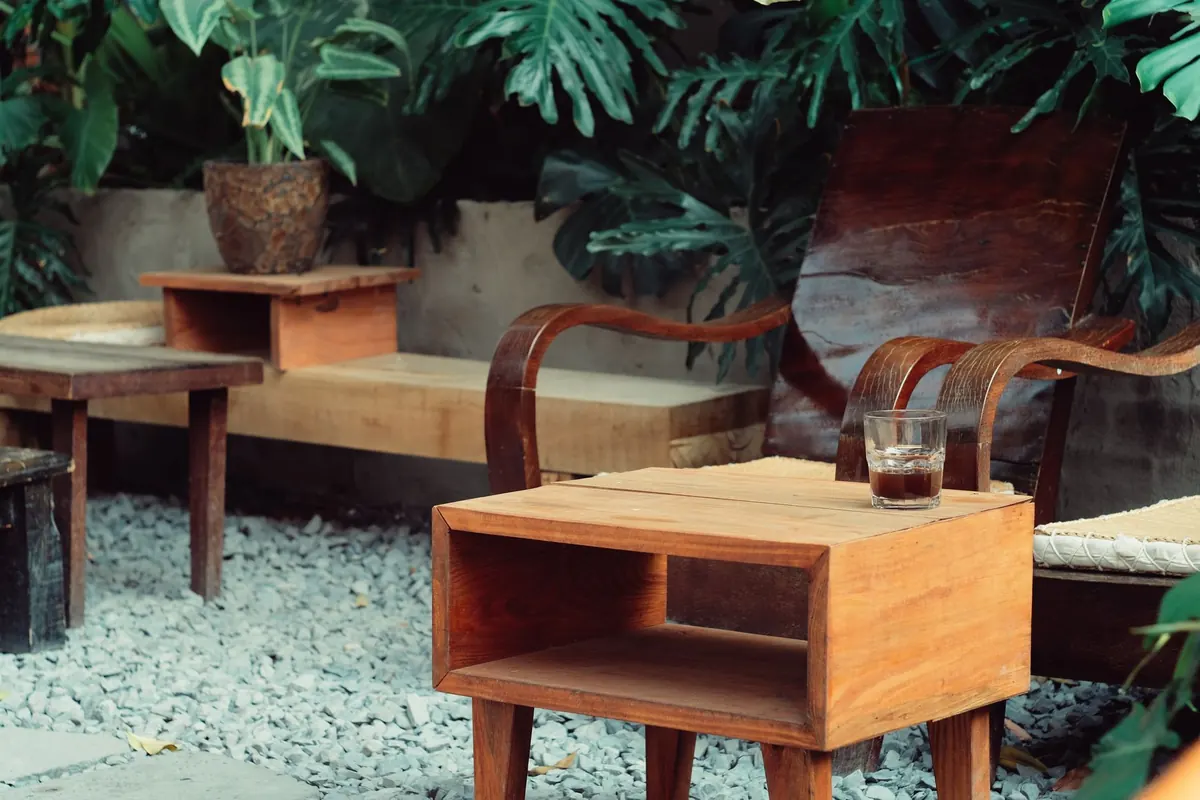
A small courtyard can be one of the most rewarding places to sit in a British home. It is also one of the easiest places to get wrong. A bench that looks modest in a garden centre can dominate a three-metre-wide yard, block the back door, or leave you squeezing past with a watering can. The fix is not to guess. It is to measure first, then choose a bench that fits the way you actually use the space.
Start with a tape measure and a piece of chalk or string. Measure the full width and depth of the courtyard, then note anything fixed: drain covers, an outside tap, the bin store, a planting bed, the swing of the back door. Mark the clear patio area on the ground. If the courtyard is L-shaped or has a step, measure each section separately.
Write down the smallest width and depth you have to play with. That is your limit. A bench that fits the widest part but not the narrowest route will still be a problem. Also measure the route from the house to the bench, and the gate or side return. If you cannot get the bench through, the size is irrelevant.
Do not forget vertical space. A high-backed bench can block a low windowsill, trap light, or make a narrow courtyard feel like a corridor. If the bench sits under a window, measure from the ground to the sill. If you plan to store cushions underneath, check the clearance too.
The usual rule for a main path is 60–75cm of clear space. For a secondary route where you only pass occasionally, 45cm can work, but it feels tight. Add the depth of the bench to that clearance. A 60cm-deep bench in a 2.5m-wide courtyard leaves 1.9m, which is generous. The same bench placed across a 1.2m-wide passage leaves nothing.
Remember the space in front of the seat. You need roughly 45cm for your legs and feet, and a little more to stand up without pushing against a wall or a planter. If the bench faces a wall or a fence, measure from the front edge of the seat to the obstacle, not from the back of the bench.
In a two-metre-deep courtyard, a 60cm bench leaves 1.4m of clear depth. That is comfortable for walking and for a small bistro table. In a 1.5m-deep yard, the same bench leaves only 90cm, which is possible but cramped. The shallower the courtyard, the more you should look at slim or backless designs.
Bench sizes are not standardised, but most fall into a few familiar ranges. Knowing them helps you filter quickly.
In a courtyard under 2.5m wide, a two-seater or a slim backless bench is often the better choice. A corner bench can use an awkward angle. A folding bench can be stored away when you need the floor clear. If the courtyard is very narrow, look for a wall-mounted drop-leaf bench or a slim metal design about 45–50cm deep.
Think about width per person, not just the label. A 120cm two-seater gives each person about 60cm. A 150cm three-seater gives each person only 50cm, which can feel snug once coats or cushions are involved. In a small courtyard, a comfortable two-seater usually beats a cramped three-seater.
This is the simplest layout for a rectangular courtyard. It leaves the centre clear for a small table, a few pots or a path to the shed. Push the bench right back so it does not eat into walking space.
Square and L-shaped courtyards often have a dead corner that is hard to use. A corner bench, or two benches set at right angles, can turn that dead space into a sociable spot. Check that the corner is truly square before you buy; old walls are rarely perfect.
Sitting with your back to the boundary and looking towards the building can feel open and light. It also means you are not staring at a fence. Just check what you are looking at: a bin store, a boiler flue or a neighbour's window may change your mind.
A bench placed away from the walls needs at least 90cm of clear space on every side to feel comfortable. In a small courtyard, that is rarely possible. If you want the look, use a slim bench and accept that you will walk around it.
Before you order, mark the exact bench dimensions on the patio with chalk, string or newspaper. Then live with it for a few days. Sit on a dining chair in that spot and check the view, the sun, the shade and the drips from a downpipe. This simple test catches problems that photos and showroom lighting hide.
If you are buying online, cut a template from cardboard or old curtain fabric and tape it down. Walk around it with a watering can, open the back door, and pull out the bin. A bench that looks fine on a screen can still be the wrong shape in a real courtyard.
Small courtyards often have limited airflow and more shade, so damp can linger. Wood may need regular oiling, metal can feel cold in winter, and resin or teak can be practical low-maintenance options. Weight matters too. A heavy cast-iron bench may be fine as a permanent fixture, but a lightweight aluminium or folding bench is easier to move when you need to sweep or store it.
Check the feet. On uneven paving, adjustable feet or small gravel pads under each leg stop the bench wobbling. A high-backed bench can make a tight space feel closed in; a low-back or backless design keeps sightlines open. If the bench sits against a neighbour's wall, choose a design that will not scrape or mark the surface.
Seat depth and height matter more in a small space because you cannot spread out. Test the seat height: if your feet dangle, the bench is too high; if your knees sit above your hips, it is too low. Armrests help you stand up but add width. A slight recline is comfortable for lingering, while a very upright bench suits a quick cup of tea.
Think about where you will put a mug, a book or a plate. A bench with a built-in shelf or a clip-on side table can save floor space. If you need storage, a bench with a lift-up seat can hold cushions and tools, but check the lid opens without hitting a wall. Also leave room for a small side table if you plan to eat outside; a bench that fits alone may not fit once a table, a planter and a barbecue are beside it.
If a bench leaves you squeezing past with a watering can, it is too big—no matter how good it looks in the catalogue.
A bench that is 10cm narrower than you imagined may be the one you sit on every morning. A beautiful three-seater that blocks the path will become a nuisance. In a small UK courtyard, the best size is the one that leaves room for the space to work. Measure twice, mark it out, and choose for the way you live.
Photo: Nguyen Huy / Pexels